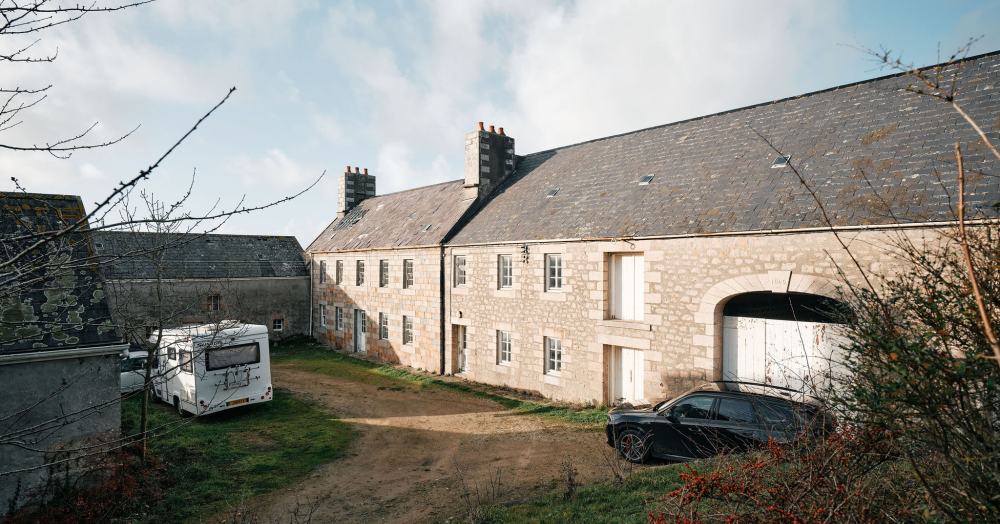
Jersey’s First Property Auction in Over 50 Years: 17th-Century Farmhouse Goes Under the Hammer!
Earlier this month, something happened in Jersey that we haven’t seen since 1973 — a residential property was sold by public auction under an Order of the Royal Court of Jersey.
That might sound like a niche bit of legal history — but it’s actually a meaningful moment for how property works in Jersey, and how disputes around land can be resolved when people simply can’t agree.
On Tuesday 13th January, the historic farmhouse La Presse in St Peter went under the hammer through a legal process called ordre en licitation. It’s rare. It’s formal. And it’s something most islanders will never come across unless they’re directly involved.
But the reason it matters isn’t just “because it happened”.
It matters because it highlights a process that is almost the complete opposite of what Jersey tends to favour: the informal tender.
What is ordre en licitation (in plain English)?
Ordre en licitation is used when joint owners of a property can’t agree what to do with it.
That might be family members. Business partners. Former partners. Estates. Co-owners who just don’t see eye to eye.
When the disagreement becomes stuck — and there’s no voluntary sale, no clean division, no agreement on value — the Royal Court can order that the property is sold by public auction to the highest bidder.
It’s not a casual decision. It’s a court-led route designed to end deadlock.
And importantly: it’s open to everyone. Existing co-owners can bid. Third parties can bid. Whoever bids highest wins.
How the auction worked
This wasn’t an estate agent “auction-style marketing campaign”. It was a sale conducted under an Order of the Royal Court.
The practical steps are simple, but the implications are big:
• On the day, the successful bidder signs the auction documentation immediately.
• A deposit is payable on the day (often around 10%, as set out in the legal pack).
• Completion then takes place on a specified Friday when the contract is passed before the Royal Court and title is formally transferred.
As part of the process, a legal pack is normally made available beforehand. That typically includes the Court orders, title documents, searches, and detailed conditions of sale.
And that last part is key, because in an auction scenario you’re buying as seen. The diligence happens before you raise your hand — not after.
Why this sale matters in Jersey
Property auctions are common in the UK. In Jersey, they’re extremely rare — especially through a court order.
The last time a residential property was sold in Jersey using this method was in 1973, which is why this one has turned heads in both the legal world and the property world.
But beyond the novelty, it shines a light on something bigger:
Jersey has a unique legal system. And when ownership gets complicated, the system has real mechanisms to force resolution — even if the people involved can’t reach agreement themselves.
Auction vs informal tender: the part buyers will care about
In Jersey, we’re used to informal tender. It’s the go-to method for a lot of agents and a lot of sellers, especially in hotter markets or for premium homes.
And to be fair, tender has its place. It can work well.
But it also comes with frustrations that buyers recognise immediately:
• You often don’t know how many other bids there were.
• You don’t know how close you were.
• You don’t know if the goalposts moved at the end.
• And you can spend days getting your finances and paperwork lined up… only to feel like the process wasn’t truly transparent.
A court-ordered auction is different. It isn’t better in every case — but it has benefits that are hard to argue with:
It’s open. You can see the bidding.
It’s decisive. When the hammer drops, the outcome is clear.
It’s fair in the moment. Everyone has the same information and the same chance.
It forces commitment. No drifting, no “let’s think about it” after effectively winning.
If you’re the seller (or the Court), it closes the door on prolonged uncertainty.
If you’re a buyer, you at least know where you stand in real time.
The trade-off is that it demands more from you up front. You can’t bid and then work it out later. You need to be ready.
And what about La Presse itself?
La Presse isn’t a turnkey home. It’s not polished. It’s not “move in ready”.
From what’s been said publicly, it’s a restoration project — the kind of place that needs vision, patience, and proper funding.
But it also represents something Jersey is running out of:
Authenticity. Rural character. Land. Outbuildings. History you can’t replicate.
For the right buyer, it isn’t just a renovation. It’s stewardship. And those opportunities are rare.
What should we take from this?
This sale was a legal milestone, but it also raises an interesting question about the wider market.
We don’t need to replace tender. And auctions won’t suit every property or every seller.
But there’s something refreshing about a process that is open, visible, and final — particularly at a time when a lot of buyers feel like the system can be opaque.
So here’s the real question:
Should we lean into more transparent sale methods in Jersey — or do you still prefer the quiet certainty (and flexibility) of tender?